
Posttraumatic Resilience and Growth
This month, the Friday Fast Facts series shifts focus to posttraumatic resilience and growth, the remarkable capacity many individuals have to adapt, recover, and even thrive in the aftermath of trauma. While trauma can have deep and lasting effects, it can also serve as a catalyst for personal development, strengthened relationships, renewed purpose, and psychological growth. Drs. Ilana Berman and Jacqueline Womersley, along with Haley Church and Zara Kenigsberg, guide us through this compelling topic.
Short Video
While some individuals develop PTSD, others demonstrate resilience, returning to their previous level of functioning despite significant stress. Still others experience post-traumatic growth, achieving positive changes beyond where they were before—such as strengthened relationships, a new outlook on life, or deepened spirituality. Recognizing this potential for growth doesn’t erase the reality of trauma; it simply acknowledges that healing can take many forms.
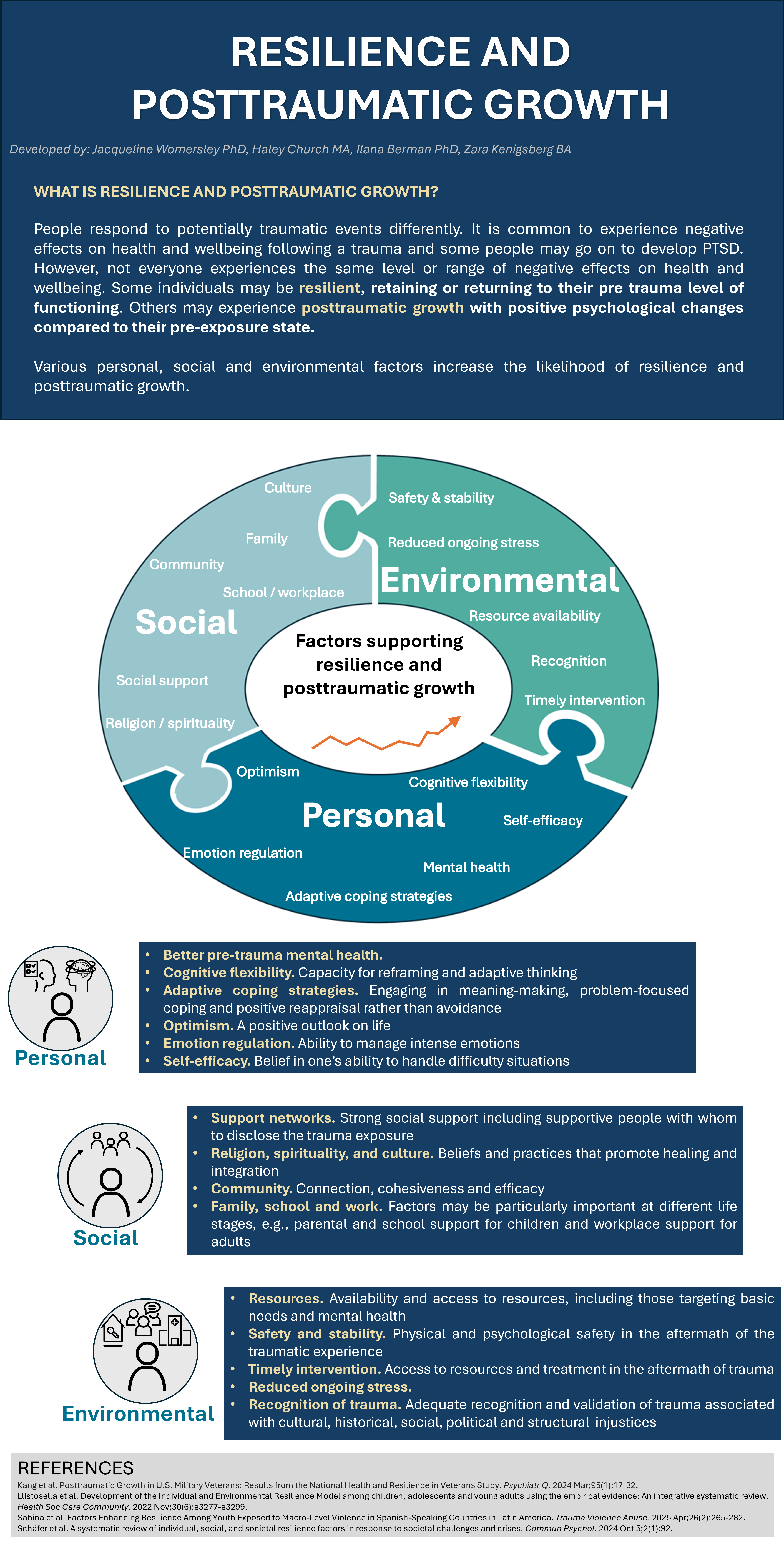
Infographic - Posttraumatic Growth and Resilience
Understanding Resilience and Posttraumatic Growth
This infographic highlights how people respond differently to potentially traumatic events, with some maintaining or regaining their previous level of functioning (resilience) and others experiencing posttraumatic growth—positive psychological changes beyond their pre-trauma state. It illustrates the personal, social, and environmental factors that support recovery and growth, including strong support networks, adaptive coping strategies, safety and stability, and access to timely resources. Together, these factors can foster healing, wellbeing, and even transformation after trauma.
Created by Jacqueline Womersley PhD, Haley Church MA, Ilana Berman PhD, and Zara Kenigsberg BA.
Podcast Episode
In this episode of Trauma Talks, hosts Dr. Melissa Zielinski and Zara Kenigsberg are joined by Dr. Priscilla Dass-Brailsford and Dr. Rich Tedeschi for a powerful conversation about posttraumatic growth and resilience. Together, they discuss the differences between these two concepts, how trauma can disrupt core beliefs, and the ways individuals and communities can adapt, heal, and even thrive in the aftermath of adversity.
Drawing on decades of clinical experience and research, Dr. Dass-Brailsford and Dr. Tedeschi share insights into the role of belief systems, social support, and cultural context in shaping recovery. They also highlight practical strategies for fostering growth after trauma and consider how the field can evolve to better support diverse populations.
Tune in to hear how resilience helps people “bounce back,” while post-traumatic growth can transform lives, creating deeper meaning, stronger relationships, and a renewed sense of purpose.